Workflow Automation with AI for Marketing Teams in Syracuse, NY
What AI workflow automation involves for marketing departments
AI-powered workflow automation is the use of artificial intelligence tools to handle automatically recurring tasks, direct tasks between people and platforms, and enhance workflow efficiency across marketing groups. Rather than asking staff to manually copy leads, write every opening email draft, or enter spreadsheet data manually, automation assists marketing operations with quicker, steadier execution.
For many teams, the value goes past saving time. AI can help with work prioritization, content personalization, lead scoring, and campaign performance analysis so teams can make better informed decisions. In practice, this means marketing managers spend less time on low-value administration and greater time refining strategy, evaluating outputs, and improving the customer journey.
AI workflow automation usually combines machine intelligence, natural language processing, and predictive analytics. These capabilities help systems recognize patterns in audience behavior, suggest next actions, and handle routine handoffs across cross-channel marketing efforts. The result is stronger operational scalability without reducing brand consistency or the human in the loop.
Why Syracuse, NY marketing teams require automation now
For organizations in Syracuse, NY, automation is now not just a perk. Local businesses compete in a market shaped by changing seasonal demand, a broad mix of sectors, and rising competition from nearby metro-area competitors. From Downtown Syracuse to Armory Square, Eastwood, Franklin Square, and the Route 11 commercial corridor, service companies, B2B firms, and SMEs need to move quickly to stay visible.
Many teams in Central New York are balancing limited staff with expanding digital expectations. A small business may need lead generation from its website, speedier turnaround for email marketing, and stronger reporting across multiple channels. Without automation, those responsibilities can burden in-house staff or hinder growth.
Digital transformation is also gathering pace across the region. Syracuse businesses that adopt marketing automation earlier can respond more effectively to local competition, customer demand, and seasonal campaigns tied to weather, events, and purchasing cycles. That advantage matters for companies trying to win attention in a crowded local search environment or build stronger pipeline momentum across the greater Syracuse metro area.
Core advertising workflows machine learning is able to streamline
Artificial intelligence may support almost every step in a modern marketing function, but some workflows provide the clearest fast results first. Across most teams, the best starting points are content creation, lead management, campaign management, and reporting views.
Content production
AI is able to boost content production by producing structures, first drafts, metadata, ad copy options, and social captions. This does not replace the human approach, but it reduces production bottlenecks and provides teams a quicker path to publish. For Syracuse organizations that want timely blogs, service pages, or local landing pages, AI may help produce more reliable content at scale.
Lead management
Lead nurturing gets more effective when AI helps segment contacts, set lead scores, and deliver personalized follow-up messaging. That can mean sending the best-fit email marketing sequence after a form fill, recommending sales-qualified contacts to the CRM, or triggering reminders when a prospect revisits a high-intent page. This is especially helpful useful for B2B firms and service businesses that count on steady lead generation.
Campaign oversight
Campaign management is another area where AI may cut manual work. Systems are able to recommend budget adjustments, flag underperforming ads, and support campaign optimization based on audience response. Teams can also automate handoffs between creative, paid media, and sales follow-up so no lead falls through the cracks.
Reporting dashboards
Reporting dashboards are able to be automated to pull data from web analytics, CRM, and ad platforms into one view. That gives managers faster reporting and real-time insights into campaign performance, source quality, and conversion trends. Instead of assembling spreadsheets each week, teams can focus on interpreting what the numbers mean and making adjustments sooner.
In what way AI boosts web design, SEO services, and digital marketing
AI workflow automation can improve web design, SEO services, and digital marketing when used as a useful production and optimization layer. The strongest results come from tying automation to business goals such as conversion rate optimization, lead generation, and better customer engagement.
In web design, AI can help study user behavior, recommend layout changes, and identify points of friction in a customer journey. Teams can use those insights to adjust page structure, strengthen https://auburn-ny-yn302.raidersfanteamshop.com/how-much-does-it-cost-to-travel-in-auburn-ny calls to action, and support conversion rate optimization without relying only on guesswork. For businesses in Syracuse, that can mean more form completions, more calls, and better performance from locally targeted landing pages.
In SEO services, AI can simplify keyword clustering, content brief creation, internal linking recommendations, and on-page optimization. It can also support natural language processing tasks such as identifying search intent and matching topics to audience needs. For local rankings, that helps teams build pages that speak to Syracuse, NY audiences while remaining relevant across Central New York.
In digital marketing, AI enables cross-channel marketing by connecting email campaigns, paid media, organic content, and website behavior. That supports more precise personalization and stronger follow-up across the customer journey. Instead of running disconnected campaigns, marketing teams can coordinate messaging, use predictive analytics to improve targeting, and measure performance more effectively.
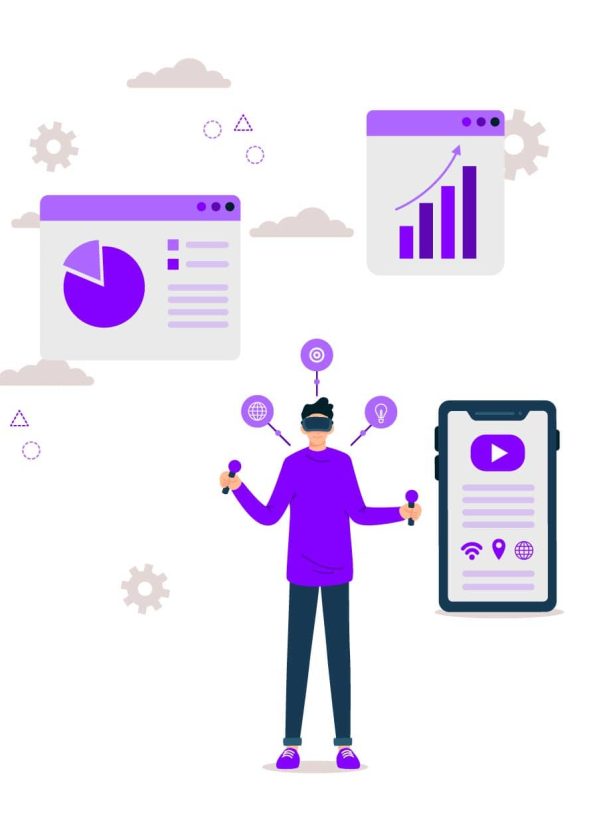
Top AI tools and connections for marketing groups
The ideal arrangement is generally not one tool, but a linked stack. Successful marketing automation is built on strong CRM integration, a powerful marketing automation platform, dependable analytics tools, and selective use of generative AI.
A CRM is central because it stores contact data, pipeline status, and engagement history. When AI connects with the CRM, teams can automate lead routing, trigger follow-up messages, and improve lead scoring based on behavior. That makes it easier to coordinate sales and marketing around shared goals.
Sunstone Digital Tech201 E Jefferson St, Syracuse, NY 13202
(315) 758-3349
https://maps.app.goo.gl/LNcnKZaUXSqxHPoT8
https://sunstonedigitaltech.com/
43.0471862, -76.1504376
A marketing automation platform can manage email marketing, nurture sequences, form follow-up, and segmentation. It becomes the operational hub for repetitive workflows, while AI adds intelligence around timing, personalization, and recommended next steps.
Analytics tools are crucial for understanding campaign performance and identifying what is working. A strong analytics layer can combine website data, ad data, and CRM activity into a more complete picture. That gives teams the real-time insights needed for data-driven decisions and better process optimization.
Generative AI can speed up draft creation for landing pages, emails, and ad copy. Used carefully, it helps teams move faster while maintaining quality. The key is to treat generative AI as a production assistant, not a final decision-maker.
For Syracuse teams, the most suitable tools are the ones that connect smoothly with existing systems and support operational scalability. Whether the focus is on lead generation for a local service business or account-based marketing for a B2B firm, the technology should reduce manual work rather than add complexity.
Why AI experts assist implement automation effectively
Working with AI experts can be the difference between a flashy demo and a system that actually improves marketing operations. Top-performing teams begin with an implementation strategy built on process mapping, data readiness, and realistic goals.
Process mapping shows the starting point of work, who owns each step, which systems are involved, and where delays happen. That step is critical because many marketing bottlenecks are not caused by a lack of talent, but by unclear handoffs between web design, content, sales, and reporting workflows. AI experts can help translate these manual processes into automated sequences.
Prompt engineering is also crucial, especially for teams using generative AI in content workflows or support tasks. Carefully crafted prompts help improve output quality, maintain brand consistency, and reduce revision cycles. A good AI expert will test prompts, evaluate output patterns, and refine the setup so the system reflects the company’s goals and voice.
In Syracuse, NY, AI experts who understand local business conditions can be especially valuable. They can align automation with seasonal promotions, metro-area competition, and the needs of smaller teams that cannot afford lengthy implementation delays. For many businesses, outside expertise accelerates adoption while reducing risk.
Typical challenges, risks, and oversight considerations
AI process automated systems brings obvious benefits, but it also requires governance. The primary concerns usually center on information privacy, human oversight, brand consistency, and workflow governance.
Privacy of data should be addressed early, especially when tools connect to CRM records, email marketing lists, and analytics platforms. Teams need policies for what data can be processed, where it is stored, and which vendors have access. This matters for businesses handling customer information across multiple systems.
Human oversight remains essential. AI can streamline repetitive tasks and speed up content production, but people should review important outputs before they go live. That human in the loop protects accuracy, ensures brand consistency, and prevents small errors from affecting the customer journey.
Workflow governance is the framework that defines how automation is approved, tested, and monitored. Without it, teams may create redundant automations or let low-quality outputs spread across channels. Strong governance includes version control, approval paths, escalation rules, and regular review of AI-powered tools.
For companies in Syracuse and Central New York, these controls matter because local businesses often rely on reputation and trust. A broken message, inaccurate claim, or off-brand email can affect lead quality and long-term credibility. Good governance keeps automation useful instead of risky.
Evaluating ROI from AI workflow automation
To assess the value of AI workflow automation, teams should monitor KPIs tied to speed, quality, and revenue impact. The most important metrics usually include time savings, lead quality, campaign performance, and marketing ROI.
Time savings are often the initial measurable gain. If automation reduces the hours spent on reporting, content creation, or campaign setup, those gains can be translated into reclaimed staff capacity. That can then be allocated in strategy, testing, or customer engagement.
Lead quality is another major metric. If AI-driven lead scoring and personalization help improve conversion rate optimization, the team should see stronger sales-ready opportunities in the CRM. Better lead quality often matters more than raw lead volume, especially for B2B and service businesses.
Marketing ROI should connect automation to revenue outcomes where possible. That could include lower acquisition costs, improved email performance, better organic conversions, or more efficient campaign optimization. If AI reduces manual work and improves results at the same time, the return becomes easier to justify.
Reporting dashboards should be built to show both operational and revenue metrics. For Syracuse teams, that means connecting website data, CRM activity, and channel performance so leadership can see what is happening across digital marketing. The goal is not just to automate for convenience, but to produce measurable business outcomes.
Getting started with an AI automation roadmap
The best way to start is with a focused roadmap rather than a company-wide overhaul. Most marketing teams should begin with a process audit, then launch a pilot program, train the team, and scale automation gradually.
A process audit identifies where work is slow, repetitive, or error-prone. Look at content workflows, lead routing, email marketing, reporting, and campaign management. Choose the workflows that consume the most time or create the most friction.
The next stage comes as a trial program. Select a single or a couple of applications that are focused enough to trial but important enough to have impact. As an example, a Syracuse service business might automate lead response and reporting, while a B2B firm could start with content creation and CRM follow-up.
Team training is critical because automation works best when employees understand how to use it. Staff should know how to review AI outputs, when to escalate issues, and how to maintain brand consistency. Training also builds confidence and reduces resistance to change.
Finally, prioritize scaling automation only after the pilot demonstrates value. Grow incrementally to additional workflows, additional channels, and deeper CRM integration. That approach enables operational scalability while preserving quality and control.
For marketing teams in Syracuse, NY, this roadmap can create a realistic path to stronger lead generation, faster turnaround, and better cross-channel coordination across Central New York. The businesses that benefit most are often the ones that treat AI as a workflow improvement strategy, not just a new technology trend.
FAQ
What is AI workflow automation for marketing teams?
AI workflow automation for marketing teams is the use of AI-powered tools and marketing automation systems to streamline repetitive tasks, strengthen marketing operations, and improve workflow efficiency. It can help with lead scoring, content personalization, reporting, and other tasks that normally require manual effort.
Which marketing tasks can be automated with AI?
AI can automate many tasks, including content workflows, email marketing sequences, lead nurturing, campaign management, reporting, and basic analytics. It can also assist with task prioritization, CRM updates, and parts of web design and SEO services planning.
How can AI improve web design, SEO services, and digital marketing?
AI can improve web design by identifying friction points and supporting conversion rate optimization. In SEO services, it can help with keyword research, content outlines, and search intent analysis. In digital marketing, AI can support personalization, campaign optimization, and better coordination across channels.
What do Syracuse, NY businesses look for in AI experts?
Syracuse, NY businesses need AI experts who understand implementation strategy, process mapping, prompt engineering, CRM integration, and workflow governance. It also works well if they are familiar with local market needs in Central New York, including lead generation, seasonal demand, and competition across the greater Syracuse area.
How to measure the ROI of marketing automation?
Evaluate marketing ROI by tracking KPIs such as time savings, lead quality, campaign performance, conversion rate optimization, and revenue impact. Strong reporting should connect automation efforts to real business outcomes, not just activity volume.